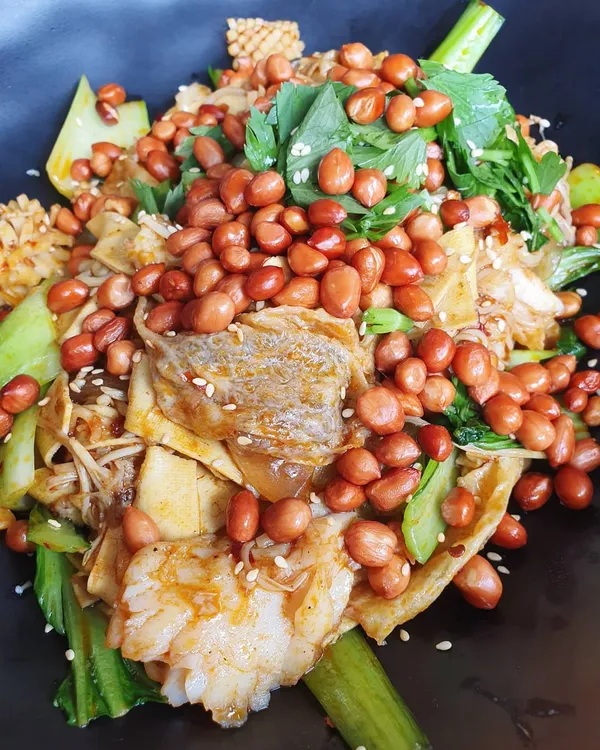
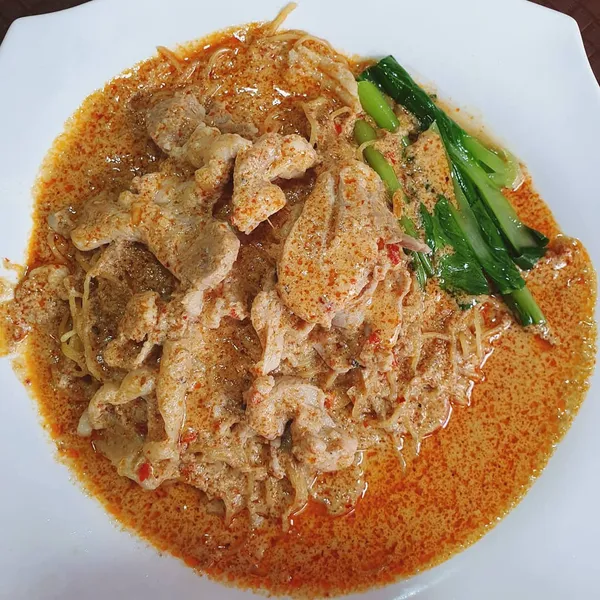
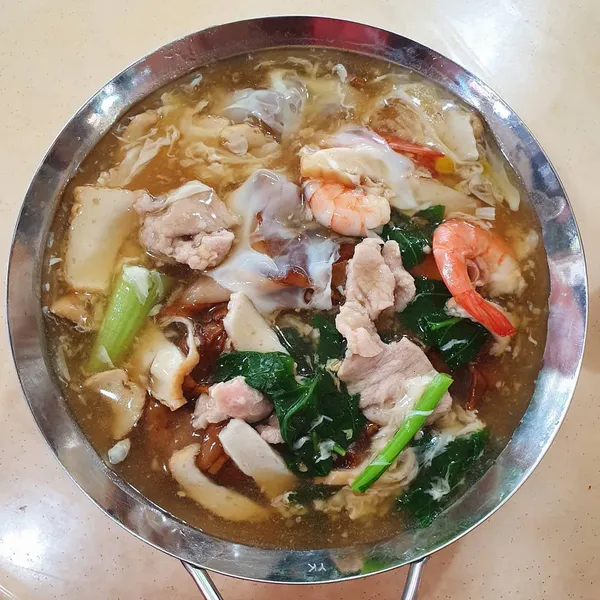
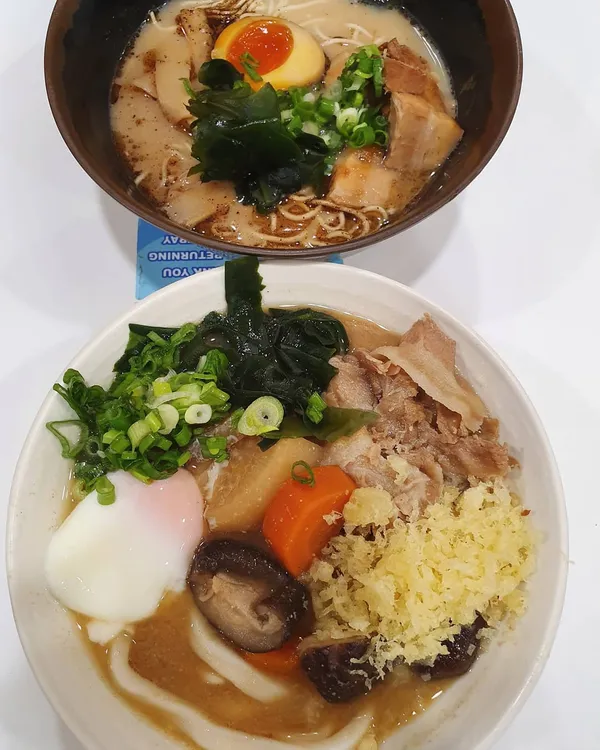
干板面 ($3.50)!
Thursday hawker — dry pan mee $3.50. Malaysian Hakka dry hand-pulled flat noodles.
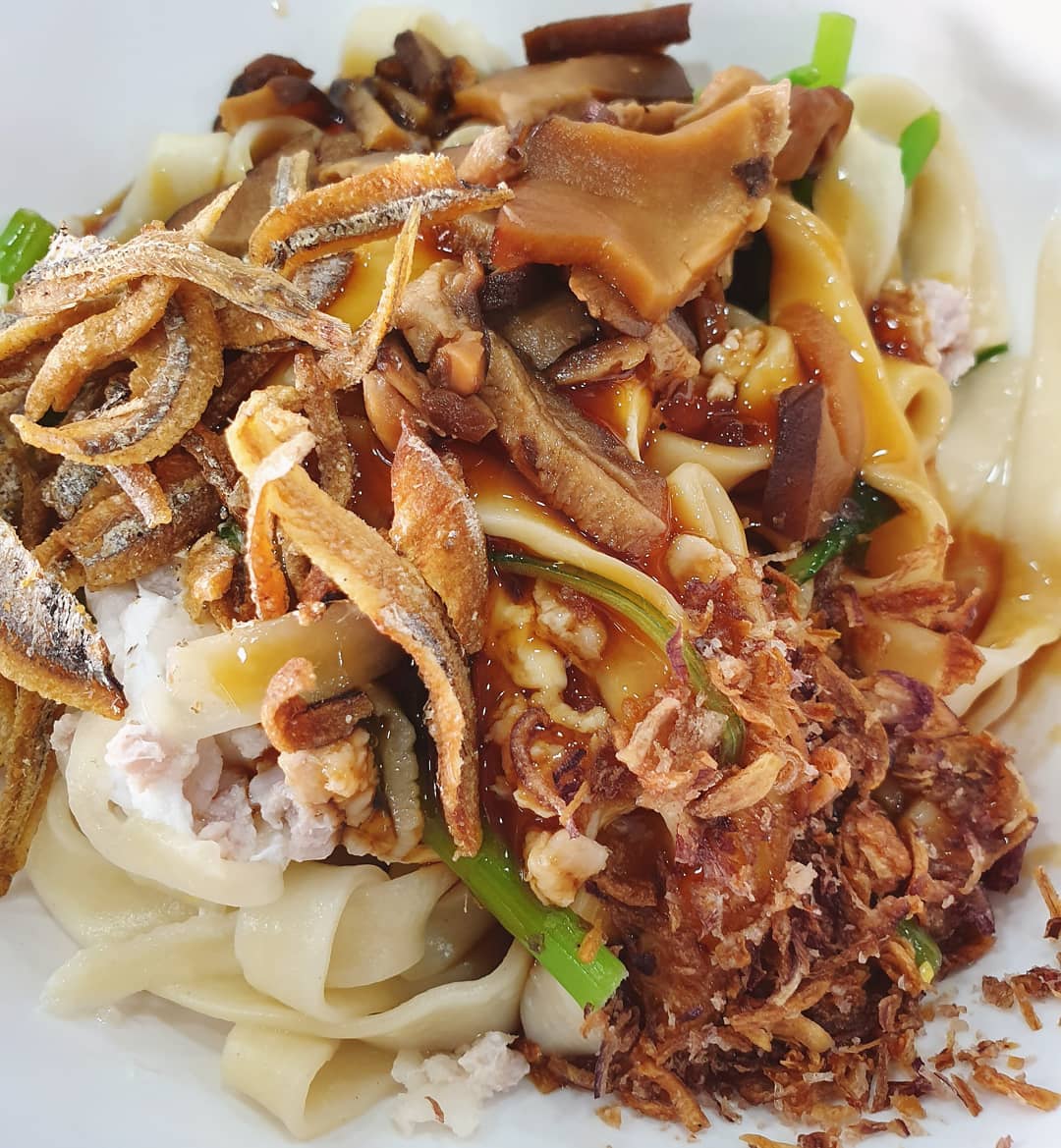
Thursday hawker lunch — 干板面 (dry pan mee) at $3.50. Malaysian Hakka dry hand-pulled flat noodles.
We ordered:
- Dry pan mee (干板面) — $3.50
The 干板面 (dry pan mee) is the dry-tossed variant of the Malaysian Hakka pan mee. Different from soup pan mee (the proper soup variant with broth), the dry pan mee runs the dry-tossed format with sauce coating + side soup.
The dry pan mee format:
- Hand-pulled flat noodles (the proper Hakka tradition)
- Tossed with dark soy + sometimes oil + sometimes Worcestershire sauce
- Topped with fried anchovies (ikan bilis) + minced pork
- Side bowl of clear anchovy soup
- Garnish: scallion, sometimes fried shallot
- Side: chilli paste (the proper Klang Valley pan mee variant)
The Klang Valley chilli pan mee variant deserves specific mention:
- Originated from Petaling Jaya / Kuala Lumpur area
- Distinctive dried chilli + chilli oil topping (the “chilli” name reference)
- Crispy dried anchovies + minced pork + chilli mixture creates the proper texture + heat
- The proper “dry pan mee + chilli + soup” eating ritual
The hand-pulled noodle preparation:
- Wheat flour + water + salt dough
- Rested + kneaded to develop gluten structure
- Hand-pulled / hand-torn into irregular flat pieces
- Boiled directly into the soup OR boiled separately for dry preparation
- Cooked al dente, slightly chewy
The signature texture is the irregular hand-torn finish. Each piece slightly different size + shape, with the dough’s natural elasticity creating the proper chewy mouthfeel. Different from machine-cut noodles (uniform, predictable), the hand-pulled pan mee has the artisanal-rustic character.
At $3.50, this represents proper budget hawker tier. The hand-pulled noodle category typically maintains the proper budget pricing because:
- The artisanal labour doesn’t scale to franchise pricing
- The simple ingredient base keeps costs low
- The heritage business model often maintains traditional pricing across generations
- The proper Singapore-Malaysian-Hakka hawker culture preservation
Singapore + Malaysia dry pan mee specialists:
- Restoran Kin Kin Chilli Pan Mee (KL — the iconic Klang Valley operation)
- Various Klang Valley pan mee specialists
- Singapore Hakka noodle hawker stalls
- Coffee shop hand-pulled noodle operators (heartland areas)
The Thursday hawker dry pan mee lunch represents proper weekday rotation. Different from the destination dining or proper sit-down restaurant, the budget pan mee provides convenient + comfort working-day satisfying meal at the most accessible pricing.
The Singapore pan mee + mee hoon kuey ecosystem represents proper Hakka migration heritage. Different from the more commercialised hawker dishes (chicken rice, char kway teow, Hokkien mee), the hand-pulled noodle category has remained relatively traditional + family-business-oriented across decades.
The hand-pulled noodle tradition deserves preservation appreciation. The decline of traditional hawker stalls + the rise of franchise restaurants threatens proper hand-pulled noodle category. Each visit to the proper hand-pulled noodle stall supports the heritage business model.
The dry vs. soup pan mee selection typically reflects:
- Dry pan mee — proper dry-tossed eating + chilli customisation
- Soup pan mee — proper broth comfort eating
- Both formats serve different mood + weather preferences
- The proper traditional stalls offer both options
Overall: 4.5 / 5. 😋👍🏼 Solid budget dry pan mee. Would re-order.