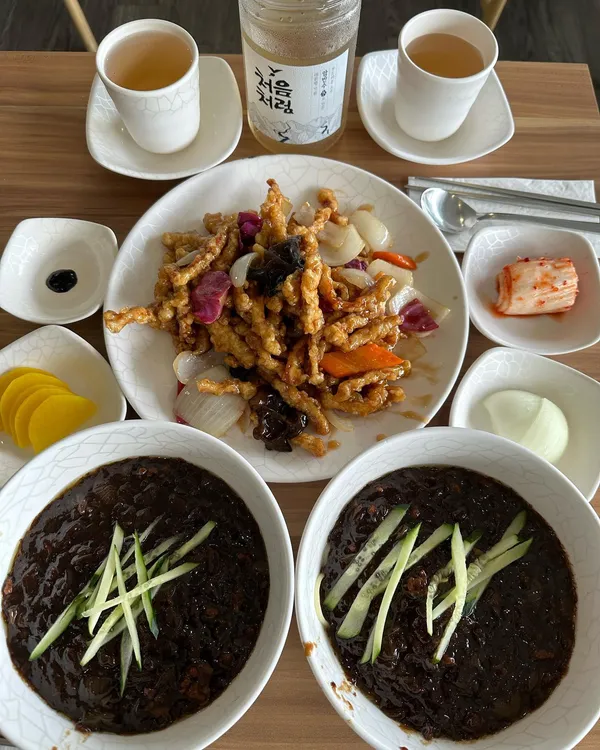
Zhajiang Mian + Xiao Long Bao (杂酱面 + 小笼包) ($9.50)!
Golden Mile dumpling stall: zhajiang mian (fried bean sauce noodles) with cucumber + carrot, and xiao long bao (soup dumplings). $4.50 + $5.
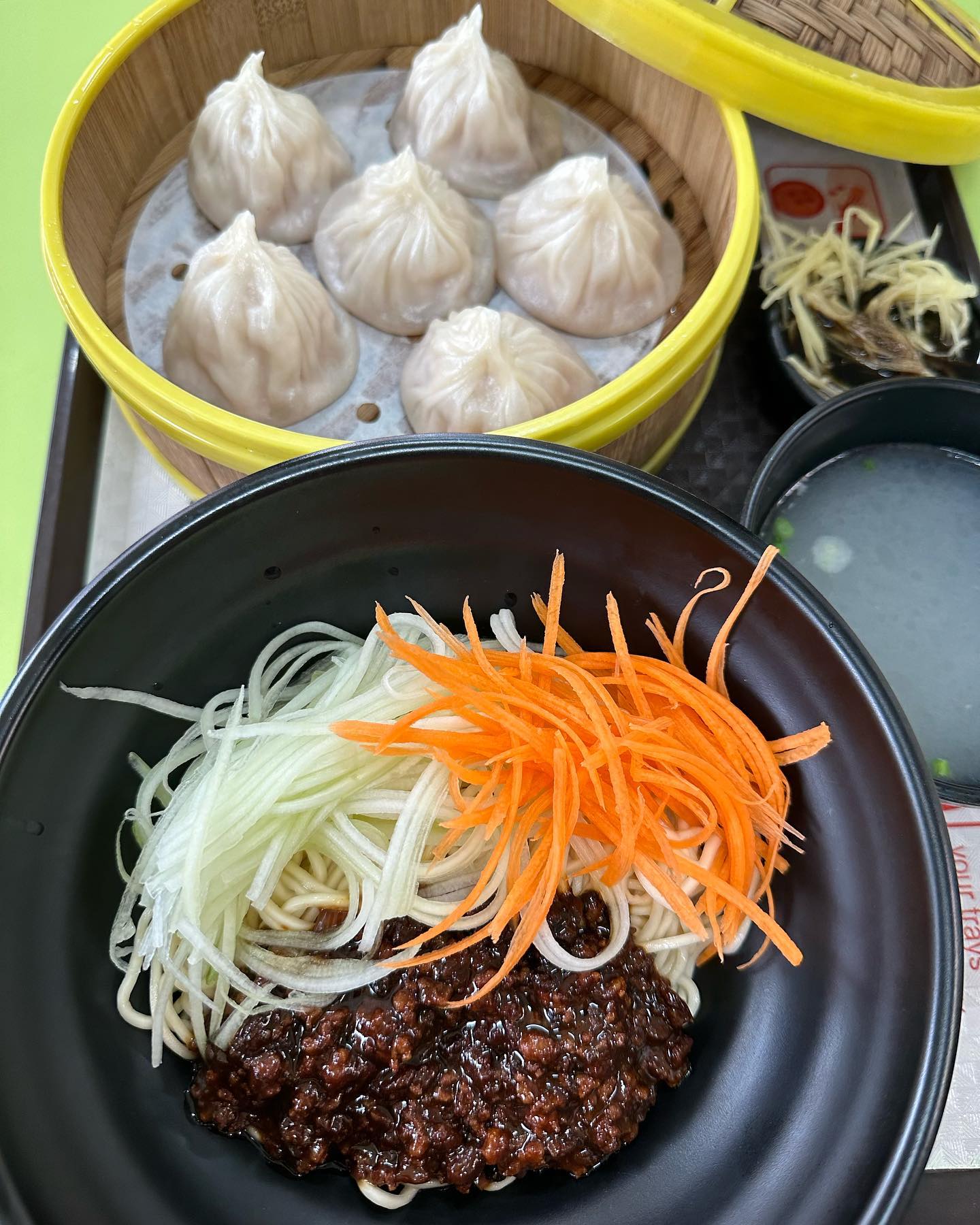
Lunch at Golden Mile. Zhajiang mian (杂酱面) + xiao long bao (小笼包), $9.50 ($4.50 noodles + $5 dumplings). 😋👍🏼
What was on the tray:
- Zhajiang mian bowl: thin yellow handmade noodles, topped with dark brown minced pork in fermented bean sauce, julienned cucumber strips, julienned carrot strips, the picturesque tri-colour pile
- Bamboo steamer of xiao long bao: 6 pleated soup dumplings, twirled-top closure, the translucent skin showing the meat inside
- Side dish of julienned ginger: the XLB dipping accompaniment
- Black vinegar dish: for the XLB dip
- Side bowl of clear soup: the broth that comes free with handmade noodle orders
Zhajiang mian (炸酱面, “fried sauce noodles”) is the Northern Chinese classic that originated in Beijing as a street food, then spread across China + Asia in regional variations:
- Beijing zhajiang mian: the original, using fermented yellow bean paste (huang jiang 黄酱) with minced pork
- Korean jajangmyeon: the Korean-Chinese variant, sweeter and darker with chunjang (black bean paste)
- Taiwanese zha jiang mian: lighter on the bean paste, more soy-based sauce
- Singapore-Chinese zhajiang mian: usually leans toward the Beijing original, with adaptations for local palate
The Beijing-style formula:
- Hand-pulled or hand-cut wheat noodles: thick enough to hold the heavy sauce
- Minced pork browned in oil: rendering the fat
- Fermented yellow bean paste (黄酱): salty-savoury-umami foundation
- Sometimes also sweet bean paste (甜面酱): adds touch of sweetness
- Shaoxing wine + ginger + garlic + scallion: aromatic build
- Long simmer: 30-60 minutes to deepen the flavours
- Julienned vegetables on top: cucumber + carrot + bean sprouts + radish (each diner picks)
The mixing instruction: stir the sauce + vegetables thoroughly into the noodles before eating. The bottom of the bowl shouldn’t have sauce left.
Xiao long bao (小笼包) is the Shanghai soup dumpling that became a global Chinese dim sum standard:
- 18 pleats is the supposed ideal (Din Tai Fung’s signature, but many stalls do fewer)
- Wrapper thin enough to see the filling but strong enough to hold the soup
- Pork-based filling with a clear pork aspic that melts during steaming, creating the soup
- Eating technique: bite a small hole, sip the soup first, then eat the rest
The proper XLB eating order:
- Place dumpling on spoon to catch any soup that escapes
- Bite a small hole at the top pleated peak
- Sip the soup out first while it’s hot
- Dip into ginger + black vinegar mix for the second bite
- Eat the remaining wrapper + filling
The Singapore XLB scene includes Din Tai Fung (the Taiwanese chain that defined modern XLB globally), Crystal Jade, Paradise Dynasty, and various heritage Northern Chinese hawker stalls at Golden Mile / Beach Road. The Golden Mile stalls run cheaper than the chains while delivering the homemade-style XLB.
At $9.50 total for noodles + dumplings, this is solid hawker pricing. A comparable Din Tai Fung order would run $15-$20 for the same dishes. The Golden Mile budget tier delivers 60-70% of the dining-chain experience at 50% of the price.
Overall: 4.3 / 5. 😋👍🏼 Solid Golden Mile noodle + XLB lunch. The zhajiang mian sauce was on point. Would re-order.