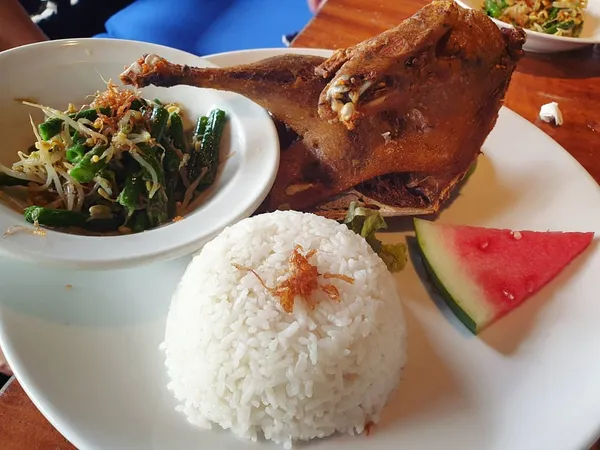
Mie goreng (Bali)!
A plate of Indonesian mie goreng on the Bali trip: fried yellow noodles with greens, egg, prawn and crispy shallots.
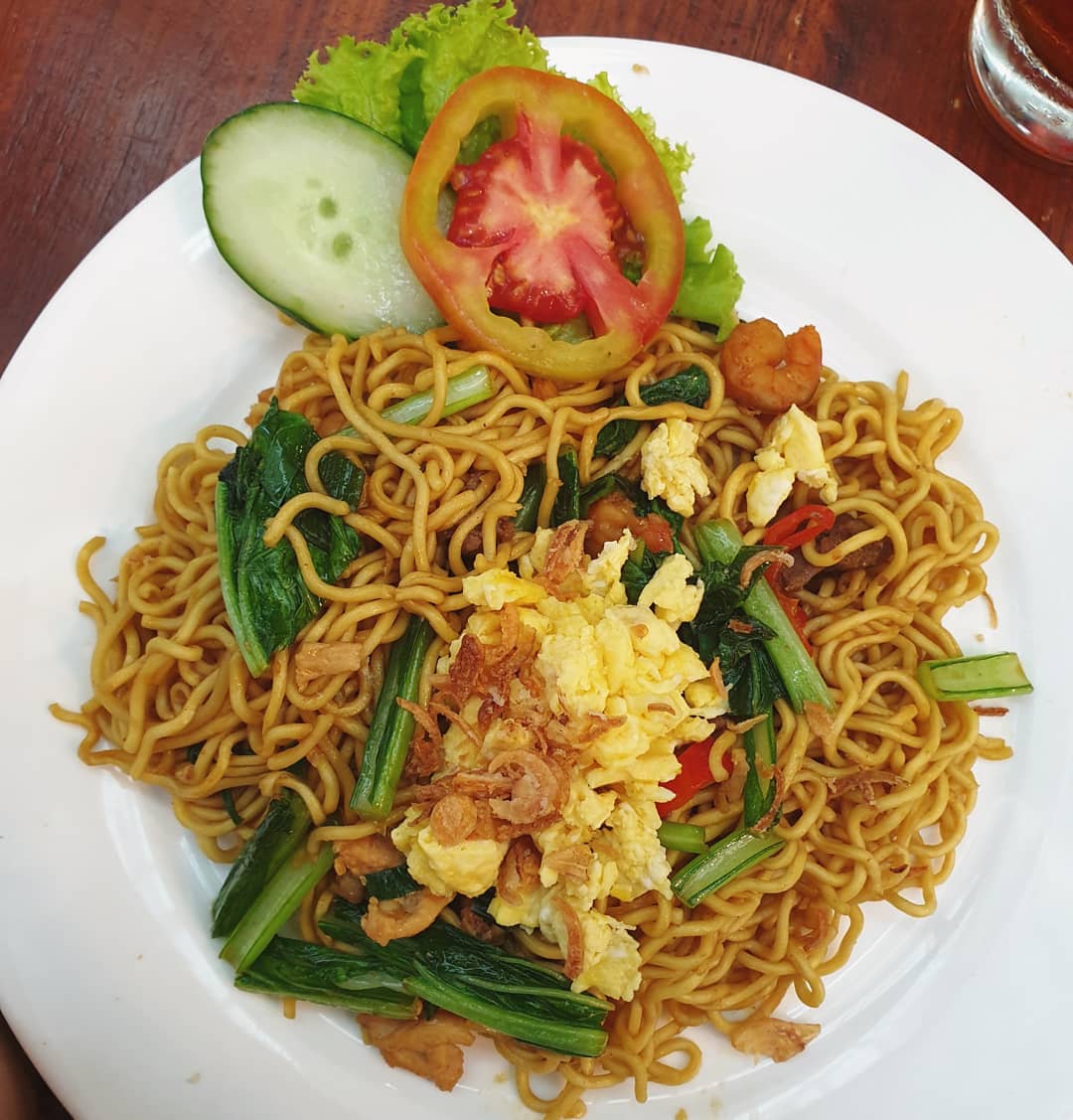
A simple, tasty plate on the Bali trip: mie goreng, Indonesian fried noodles. 🇮🇩😋
What we had:
- Mie goreng: fried yellow noodles with greens, egg, prawn and crispy shallots, with cucumber and tomato on the side
Mie goreng is holiday comfort food, and this was a generous plateful. The yellow noodles were wok-fried until savoury and a little smoky, glossed with that sweet-soy (kecap manis) seasoning that gives Indonesian fried noodles their distinctive dark, sweet-savoury character.
Tossed through were leafy greens, scrambled egg, a few prawns and a good scatter of crispy fried shallots for crunch and fragrance. A little chilli ran through it for warmth, and the cool cucumber and tomato garnish on the side gave a fresh bite between mouthfuls.
It is the kind of unfussy, satisfying plate you find everywhere on the island, sweet, savoury and moreish, the sort of thing you happily eat for lunch every day of a trip. Holiday food at its most comforting.
Overall: 4.3 / 5. 😋👍🏼 Sweet-soy fried noodles with prawn, egg and crispy shallots, easy holiday comfort. Would re-order.