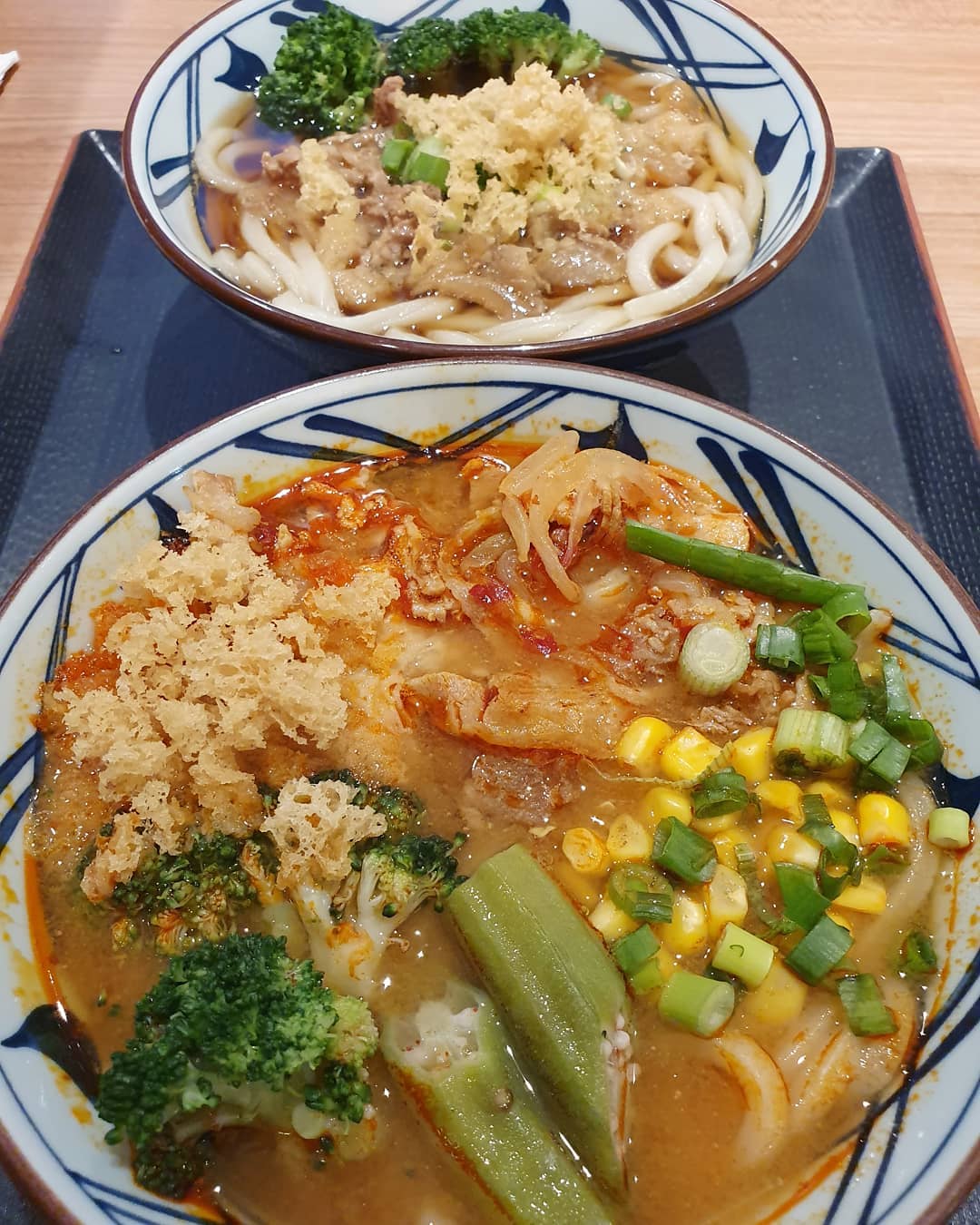
Pork udon in spicy miso soup ($11.90) & Beef udon in bonito broth ($11.90)!
Friday Japanese udon — pork udon in spicy miso $11.90 + beef udon in bonito broth $11.90. Japanese udon specialty restaurant.
Friday Japanese udon dinner with BB — pork udon in spicy miso soup $11.90 + beef udon in bonito broth $11.90. Japanese udon specialty restaurant pair.
We ordered:
- Pork udon in spicy miso soup — $11.90
- Beef udon in bonito broth — $11.90
Total: $23.80 for both bowls.
The $11.90 per bowl pricing tier represents the proper Japanese udon specialty restaurant range. Different from the mall food court udon ($8-10 per bowl) or the destination udon specialist ($15-22 per bowl at Tamoya, Marugame Udon premium tier), the $11.90 tier sits in the proper casual-mid Japanese restaurant range.
Japanese udon is the thick wheat noodle category from Japan. The key udon styles:
- Sanuki udon (Kagawa prefecture) — the iconic square-cross-section, firm-chewy “koshi” texture
- Inaniwa udon (Akita prefecture) — thinner + smoother handmade udon
- Mizusawa udon (Gunma prefecture) — moderate thickness + smooth texture
- Kanto-style udon — softer + thinner, common in Tokyo region
- Kansai-style udon — softer + lighter broth, common in Osaka region
The pork udon in spicy miso soup ($11.90) is the Korean-influenced udon variant. Standard preparation:
- Thick udon noodles (typically Kanto-style — softer + thinner)
- Spicy miso broth (red miso base + chilli paste + sometimes gochujang)
- Sliced pork (chashu or thin-sliced pork)
- Sometimes corn + scallion + bean sprouts as toppings
- Crisp negi (Japanese leek) garnish
The spicy miso broth represents the Japanese-Korean fusion direction. Different from the traditional clear dashi (the proper Japanese udon broth) or the kake udon clear broth (the most basic format), the spicy miso variant adds the proper heat + umami depth.
The beef udon in bonito broth ($11.90) is the traditional-influenced udon variant. Standard preparation:
- Thick udon noodles
- Clear bonito (katsuobushi) broth — the proper traditional Japanese udon broth
- Sliced beef (often gyudon-style — slow-simmered beef belly in soy + mirin)
- Garnish: scallion, sometimes nori or shredded daikon
- Optional addition: raw egg, tempura, or kakiage
The bonito broth (dashi) is the foundational Japanese stock. Standard dashi preparation:
- Konbu (kelp) soaked then briefly heated
- Katsuobushi (dried bonito flakes) added at low heat
- Strained to produce the proper clear stock
- The proper umami balance from the konbu + katsuobushi combination
The clear bonito broth highlights the proper udon noodle character. Different from the spicy miso variant (which provides bold flavour layered over the noodles), the bonito broth provides the clean umami foundation that lets the udon take centre stage.
The combination of spicy miso + clear bonito represents the proper Japanese udon menu sampling. Different from ordering two similar udon styles (which would be flavour-monotonous), the contrast across the two broths provides the proper variety:
- Spicy miso — bold + warming + multi-layer complex flavour
- Bonito broth — clean + umami + showcase-the-noodles character
- Different protein options (pork vs. beef)
- Different eating progressions (slow-savor vs. broth-noodle focus)
Singapore Japanese udon specialty restaurants:
- Tamoya Udon (Clarke Quay outlet + multiple locations — sanuki udon specialist)
- Marugame Udon (multiple outlets — quick-service udon chain)
- Tsuru-Koshi (specialty udon operations)
- Various casual Japanese restaurants with proper udon menus
The Friday Japanese udon dinner format is the proper weekend kickoff dining choice. Different from the casual hawker eating or the destination Japanese fine dining, the udon specialty restaurant provides the proper casual sit-down Japanese experience.
Overall: 4.6 / 5. 😋👍🏼 Solid Japanese udon dinner — spicy miso + bonito broth pair. Would re-visit.